Europe as a Multiple Modernity: Multiplicity of religious Identities and Belonging (Cambridge Scholars Publishing, 2014)
CHAPTER TWELVE
ESTONIAN WOMEN’S IDENTITY AFTER CONVERSION TO ISLAM
Introduction
According to the Gallup survey (Gallup, 2010), Estonia is one of the least religious countries in the world. In this small country, public opinion is characterized by prejudice against Islam (Saar Poll, 2010) where the media portray it negatively as a threat to the state, independence, and women’s individual liberties. This chapter investigates why, in spite of such a hostile atmosphere, the number of Estonian women who have chosen to become Muslims has increased in recent years. The article is based on interviews, which were held in February 2010 with six Estonian women who have converted to Islam. It proceeds by analysing these choices, and the emergence of their new identities. These identities combine Islamic and Estonian Christian culture and traditions, and can be analysed in terms of how two different paradigms have intertwined to affect these women and their attitudes toward the society.
Religious Situation in Estonia
Estonian culture has a Christian background. According to the Article 40 of the Estonian Constitution, everyone may freely belong to any Church or religious association, and there is no state church in Estonia (Eesti Vabariigi Põhiseadus, 1992). The predominant position of Lutheranism is based on a centuries-long tradition and many people still believe this is the Estonian state church (Ringvee, Institutional organization, 2009). Article 12 of the Estonian Constitution declares that no one may be discriminated on the basis of nationality, race, color, sex, language, origin, creed, political or other persuasions, financial or social status, or other reasons (Eesti Vabariigi Põhiseadus, 1992).
According to the Census from the 1st January 2000, the Estonian population totals 1,121,582 , of which 31,8 per cent declared they follow one religious tradition. The biggest Church is the Lutheran Church with 152,237 members, followed by the Orthodox Church with 143,554 members. As a matter of comparison, Estonian Islamic Congregations has 1,387 members (Statistikaamet, 2000).
The framework for religious associations as legal entities is jointly set by the ‘Act on Churches and Congregations’ (1993, 2002). Religious associations receive their legal capacity after registration at the registrar department of the Courts on the basis of the ‘Act on Churches and Congregations’. The requirements for a religious association to become a legal entity are the same for all denominations, and there is no distinction between religious associations on the grounds of membership numbers, or the length of historical presence in the country. The minimum membership required for registration is 12 members with full legal capacity (Ringvee and Eurel, 2011).
As of September 24th 2010, there are 10 churches, nine congregational associations (totaling 470 congregations), 73 individual congregations and eight monasteries (seven nunneries and one monastery) registered in the Registry of Churches at the Ministry of Internal Affairs (Siseministeerium, 2010). In addition to these registered organizations, certain religious associations have registered themselves as faith-based associations, others as non-profit organizations and, still, there are certain associations, which have deemed it unnecessary to register with the state (Ringvee, Institutional organization, 2009). The Estonian Sunni Congregation is a part of these 73 individual congregations (Siseministeerium, 2010).
Estonia as the Least Religious Country
In 2011 Estonia had the honour to be in the BBC’s final part of the “Extreme world” where the journalists examined the importance of religion in peoples lives. A Gallup survey (Gallup, 2010) found that 84 per cent of adults worldwide still see religion as an important part of their daily lives – unchanged for the past four years. The survey was conducted in 114 countries in 2009, and it showed that in 10 countries, including Bangladesh, Niger, Yemen and Indonesia, at least 98 per cent of the population stated that religion is important in their daily lives. Each of the most religious countries is relatively poor. By contrast, in countries with a much higher life standard only about 47 per cent of the population stated religion is important in their daily lives. The least religious countries surveyed included Denmark on 19 per cent, Sweden on 17 per cent and Estonia on 16 per cent (BBC, 2010). Why is Estonia the least religious country and what are the reasons? One glimpse at Estonia’s recent history is sufficient to find answers to these questions.
Estonia spent fifty years under Soviet occupation where one of the central aims of the Soviet cultural policy was to destroy peoples religious identity. Following the Soviet annexation of Estonia in 1940, the religious life of Estonians came under fierce attack (Ringvee, 2009). The government closed churches and used buildings for community needs such as gyms and places to keep animals or crops, and believers were expelled from the University, or they lost their jobs. It was forbidden to give religious education in schools from 1940 until 1980 (Schihalejev, 2009, p. 42). The Department of Theology at the Tartu State University, where both Lutheran and Orthodox ministers were educated, was closed. The Estonian Apostolic-Orthodox Church was turned over to the Russian Orthodox Church’s Patriarchate. The activities of numerous religious organizations were prohibited, and religious periodicals were banned. Churches and religious organizations were strictly regulated; religious activities could take place only in prescribed locations. Additionally, it became shameful and punishable to be a member of churches. Soviet cultural policy was destroying the people’s religious identity.
Nowadays, we can state that the atheistic system was successful; the majority of the younger generation are estranged from religion. During the second half of the 1980’s, when the Soviet Union went toward its collapse, control over the religious life weakened and people began to express interest toward religion again (Ringvee, 2009). However, the damage has already been done; religious roots are cut off.
God is not part of the everyday life, people do not know how to pray, why it is important, and even “who is God”? Everybody knows, from textbooks, that the world begun with the Big Bang and that people have developed from monkeys. Nowadays, young people value social authority, recognition and the possibility to have power to make decisions. Social status gives the opportunity to know the right people and have the power (Niit, 2004, p. 53). Society encourages people to devote their life to developing careers, earning money, buying expensive things and living life without deeper meaning.
Because of these reasons, many people agree to sacrifice good relationships for this goal – social status (Puur, 2004, p. 74-75). In the Estonian society, it is considered ridiculous to believe there is God because this view is not seen as helpful to achieve better things than others (e.g. God cannot help you to buy a better car than your neighbour).
Methodology
Public opinion is characterized by prejudice against Islam and religion in general; however, there are women who decided to devote their lives to God. Some of them decided to become Muslims. Their decision raises questions: how did they find Islam and did they change their lifestyle after conversion? Did they transfer something from the Estonian culture and Christianity to Islam that makes it possible to say that Estonian Muslim women are a mix of Estonian culture, Christianity and Islam?
To find out answers to these questions, interviews were held in February 2010 with six Estonian women aged between 19 and 49 years, who have converted to Islam. The aim was to put together a sample of women from different backgrounds, age and education in order to show an overview of Estonian Muslim women’s beliefs, behaviour and thinking. Responses from interviewed women are consecutively marked as “Respondent 1”, “Respondent 2”, and so on.
Three interviewees have a university degree, one has a High school diploma, one Elementary school diploma, and one has not completed the Elementary school. The longest period to be a Muslim is 16 years and the shortest is seven months. Three of them are married with Muslim men (2 Moroccans, 1 Algerian), one is engaged to a Muslim man (Egyptian), and two have children with Estonian men from previous marriages.
Each woman received a four-page open-ended questionnaire divided into four sections: background, family, lifestyle and beliefs, and they were asked to answer questions in their own words. From their responses, keywords have been brought out to create a coding network to show 1) what kind of Estonian and Christian traditions they have transformed to Islam and 2), whether Estonian Muslim women are different from Muslim women in general.
Results
Faith in Estonians lives
A Saar Poll survey “Faith in our lives” (Saar Poll, 2010) conducted in 2010 asked 1009 people all over Estonia, aged between 15 and 74 years, questions about what they believe in, and what kind of religious habits they have. The survey also asked them to describe different situations and their opinions about various situations. They divided people’s answers into three categories: 1. People to whom faith is important, 2. People to whom faith is not so important, and 3. People to whom faith is not important at all. Table 1 presents the results of the survey describing Estonian religious life and habits.
Table 1. Importance of faith in Estonia
| Faith is important | Faith is not so important | Faith is not important at all | |
| I’m a believer | 42,7% | 8,3% | 1,6 % |
| I’m an atheist | 1,9% | 3.9% | 20,7% |
| I’m a member of a certain church or congregation | 47,9% | 12,5% | 4% |
| In childhood someone informed me about faith and God | 30,5% | 11,9% | 2,3% |
| The informer was grandmother | 63,9% | 59,4% | 54,2% |
| The informer was mother | 62,3% | 57,9% | 47,5% |
| I’m baptized | 84,6% | 58,9% | 34,8% |
| I pray every day | 24,3% | 1,9% | 0,8% |
| I don’t pray at all | 27% | 71,1% | 91,7% |
| I go to church every week | 14,3% | 0,5% | 0% |
| I never go to church | 26,4% | 50,5% | 80,5% |
| I go to church to find peace of mind | 51% | 28,5% | 18,0% |
| I go to church because it’s my Christian need and duty | 27,7% | 7,3% | 5,9% |
| Religious education has to be a voluntary subject in high schools | 67,9% | 68,5% | 61,6% |
| Religious education has to be a main subject in high schools | 18,9% | 6,4% | 4,9% |
| I have a friendly attitude toward Christianity | 86% | 61,7% | 31% |
| I have a friendly attitude toward Islam | 18.6% | 10,4% | 4,5% |
Source: Saar Poll (2010); author’s table presenting the compilation of the Saar Poll’s results
Therefore, an interesting fact appears: people, who do not find faith important at all, still prove they are believers. It seems to be a dilemma: how can someone be a believer and, at the same time, declare that faith is not important at all. Therefore, do these people really understand what a statement “I’m a believer” means, or do they think that if they are baptized that means they are believers? The same dilemma appears when someone declares as an atheist. In that case, how can it be possible that “faith” is important to that person? Are faith and being a believer not connected with each other?
The fact that the percentage of members of churches or congregations is higher than the percentage of believers’ shows that certain people are just on the lists of churches or congregations. The reason can be a desire, or a wish to have a marriage ceremony in church, or to become a godparent. Before, to become a godparent or to have a marriage ceremony in church, people had to be baptized, and through this process they also became members of churches. However, what happens if one has a dream from childhood to marry in the church? Is it possible that one agreed to let her or himself be baptized even if she or he is not a believer? Or, if the best friend is asked to become a godparent and if the person is not baptized, he or she will do it to make her or his friend happy. Also, to become baptized was very popular in the early years since the independence from the 1990s. This was the time when people again gained freedom to go to church without being afraid of prosecution. Looking at percentages of peoples habits to pray and to go to church, it obviously appears that Estonians still do not value God, churches and faith. Going to Church on Sunday mornings is just one way to spend free time, but it does not have a connection with everyday life or with becoming a better person. Why it is valuable to go to church, pray or be thankful to God has not been widely taught. Normally, people begin to pray when they are in trouble, have tried everything else and cannot see any other solution, etc. Therefore, Estonians go to Church because they are looking for peace and for solutions to problems, not as much as Christians who believe it is their duty (Saar Poll, 2010). This kind of thinking is a part of the influence from the Russian time that successfully cut off Estonians’ religious roots (Ringvee, 2009).
At the beginning of the 1990s, there was again an opportunity to begin to teach religious education in schools. According to the Elementary Schools Act (Põhikooli õppekava, 2010) and High Schools Act (Gümnaasiumi õppekava, 2010), religious education in public school is a voluntary subject, and schools are required to conduct religious education if there are at least 15 students of the same study age. According to the Saar Poll survey “Faith in our lives” (Saar Poll, 2010), more than 60 per cent of the respondents from all categories – 1. Faith is important, 2. Faith is not so important, and 3. Faith is not important at all – agreed that religious education has to be an optional subject in High schools. However, there are only a few schools in Estonia that offer religious education to pupils. According to the Estonian Ministry of Education and Research’s statistics (10.11. 2010), 103 Elementary Schools (18 per cent of the total number of the Elementary Schools) teach religious education (EHIS, 2010).
In spite of the Soviet’s ideology meant to destroy people’s religious identity, Estonians still have a good attitude toward Christianity even though they are not religious, but as regards Islam the figures are much lower. A survey “World’s values” (2001) demonstrated that Estonians have a low tolerance and a sceptical attitude toward foreigners (Realo, 2004, p. 36). However, whatever is new and strange and does not fall within the societal rules normally turns to hate (Sarv, 2010, p. 12). Western societies see Islam and Muslims as a danger for their culture and values, and it is an overall European trend to criticize this religion (Roald, 2004, p. 61). Most of the literature, movies, TV-shows, newspapers, magazines, and websites show Islam in a negative way (Roald, 2004, p. 65) mainly pointing out terrorism and the unfair treatment of women (Roald, 2004, p. 69). However, according to the Gallup survey, Christianity is the biggest religion in the world with approximately 2.1 billion followers or 32 per cent of the world population, but Islam is second with 1.6 billion members, representing 23 per cent of the world population in 2009 (BBC, 2010). After all the negative propaganda, there has to be a reason why people still convert to Islam.
Estonian Muslims
Historically, Islam in Estonia is connected with the local Tatar minority. A sizeable Tatar community came to Estonia in the 19th century. In 1928, the Estonian Islamic Congregation was founded (Plaat et al, 2005, p. 7-8). Besides the Tatars, that congregation also unites the Azerbaijanis, Kazakhs and Uzbeks. In 1995, a second Islamic congregation was founded: the Estonian Muhammedian Sunni Congregation (Ringvee, 2009). According to the 2000 Census, there are 28 Estonian women who declare as Muslims (Statistikaamet, 2000). The number is nowadays higher; however, a new Census is due.
Estonians and the Christian traditions: What Estonian Muslim Women have transformed to Islam
According to the interviews, which were made in February 2010 with six Estonian women who have converted to Islam, one can see which Estonian and Christian traditions Estonian Muslim women have transformed to Islam, and how their thinking is different from Muslim women in general.
After completing the conversion process, the most important and the most symbolic act is to choose a new Islamic name (Allievi, 2006, p. 129). Changing a name means changing identity and being born again like a new person (Bourque 2006, p. 239), as well as taking religions obligations and responsibilities (Allievi, 2006, p. 124):
“I have not changed my name officially, and I don’t see any point in doing it. There is no law that requires changing the official name to the Islamic name. Prophet Muhammad ordered to change the first name if this name means something bad, like Harb that means War. This was a popular male name in pre-Islamic time, so men who converted to Islam normally changed their name to Salam (peace).” (Respondent 6)
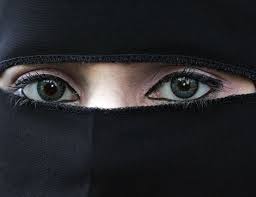
Quran and Sharia Law require covering from the neck to anklebones and arms upper elbow (Hattstein, 2008, p. 73). The Laws also require:
“… and tell the believing women to lower their gaze (from looking at forbidden things), and protect their private parts (from illegal sexual acts), and not to show off their adornment except only that which is apparent (like both eyes for necessity to see the way or, outer palms of hands or one eye or dress like veil, gloves, head, cover, apron, etc), and to draw their veils all over Juyubihinna (i.e. their bodies, faces, necks and bosoms), and not to reveal their adornment except to their husbands, or their fathers, or their husband’s fathers, or their sons, or their husband’s sons, or their brothers or their brother’s sons, or their sister’s sons, or their (Muslim) women (i.e. their sisters in Islam), or the (female) slaves whom their right hands possess, or old male servants who lack vigour, or small children who have no sense of feminine sex …” (24:31b) (King Fadh Complec, 1990).
Women’s clothes have to be spacious and modest and hide the body (Breuilly et al, 1999, p. 80). There is no opportunity for women go to swim with swimming suits or to enjoy sunbathing; it is a taboo:
“I don’t veil because I don’t like to be recognized as a Muslim on the streets and get ridiculed. I would like to stay neutral.” (Respondent 3)
“Yes, I’m going to sunbathe and to swim.” (Respondent 4)
“I’m not exposing myself to the sun because I have a very white skin and I burn within seconds. I swim with normal swimming clothes. I have never tried to go swimming with all my clothes on, but I think it would be uncomfortable if everything is just floating around me.” (Respondent 6)
By wearing Islamic clothes and veils, women do not have to care anymore about their figure or what other people think about them because only God and their husband’s opinion are important. It is a woman’s duty to look good for her husband (Bourque, 2006, p. 242). That is why she puts on the make-up or headdress at home for her husband (McGinty, 2006, p. 102):
“I do not put make-up when I am at home, but when I go out, I put on something discrete.” (Respondent 1)
“When I am going out, I put make-up such as mascara, light lipstick and seldom black eye liner.” (Respondent 5)
The responsibility of Muslim women is to take care of home and the upbringing of children (Haddad, 2006, p. 34). Motherhood and being a housewife is highly appreciated (Bourque, 2006, p. 240). Three Estonian Muslim women are working as teachers in school, kindergarten and as a dentist. All of them are active in the community and they have hobbies, even though this is not allowed in Islamic countries:
“I sing in a choir, go to handcraft courses and aerobic trainings. I also like to go to walk in the nature and take photos.” (Respondent 1)
“I take part in events in the kindergarten, if they ask me. My favourite hobby is music; I like musical instruments and I often play them at home.” (Respondent 2)
“I sing in a choir, attend the language school, and I am taking part in a handcraft course. I am taking different trainings. My favourite hobbies are travelling, roller-skating, reading and walking.” (Respondent 3)
“I like to walk, swim and read. I attend a language school.” (Respondent 4)
“Photography was and still is my favourite hobby.” (Respondent 5)
“Now I am pregnant so I am going to yoga, and I am taking part in the family school. Normally, I have so little time that I cannot take part in any courses or trainings. My favourite hobby is reading. Before, I also took part in aerobic, but now I don’t have time for that anymore. I also like to make handcrafts. My husband doesn’t decide what can be my hobbies or, how I spend my free time.” (Respondent 6)
In Islamic law, women are not allowed to travel alone; they have to have male guards who have to be older than 10 years (Roald, 2004, p. 156-157):
“Normally, I travel alone, or with my children.” (Respondent 1)
“I haven’t travelled alone until now, but I don’t see it will be problem if I will have to.” (Respondent 3)
“I have travelled alone several times, and my husband has stayed at home.” (Respondent 6)
Circumcision is not a part of the Estonian culture. That is why it is not necessary to regulate this matter with laws. Only Jews and Muslims are circumcised (Aasaru, 2011):
“I am not going to let my boy get circumcised. I respect this custom, but I don’t see the need to follow it without medical sickness because it is easy to clean yourself under foreskin.” (Respondent 2)
Normally parents raise children in the same religious tradition.
“I am trying to introduce faith to my child, but only if he is interest because if I force him, then praying will look more like a punishment than a blessing.” (Respondent 3)
Normally, Estonian Elementary and High schools have mixed classes, and at the same time Islamic tradition demands that boys and girls attend classes separately.
“It is natural for my child to go to the mixed class where boys and girls study together, but gymnastics has to be separated.” (Respondent 2)
“I am happy with mixed classes; I don’t see any problem with it.” (Respondent 3)
Women are allowed to let their children go to art classes where children have to paint naked people. In the Islamic tradition, the naked body is a taboo.
“Yes, I let my child going to the art classes to paint naked people because naked bodies are a God’s creation.” (Respondent 3)
In Islamic countries, state and religion are connected with each other, and everyday errands are a part of the religious life. Islamic schools are religious schools where pupils get religious education. In Estonia, state and religion are separated. Very few schools give religious education, and even then it is an optional subject.
“It is necessary to know about other religions, but at the same time there has to be an opportunity to choose one religion that child can learn deeply.” (Respondent 1)
“It wasn’t very long time ago when religious education was compulsory in schools. Nowadays, Estonians think it is totally incomprehensible, sometimes even ridiculous, that people believe in God and pray. I think, if we have religious education as a part of schools subjects again, it will change a lot for children’s worldview and criminality level will go lower in the society. In Finland, religious education is a part of the school curriculum so why we can’t have it here too? In Islamic countries, there are also different schools for Muslims and Christians, and if you want to put your child to school, you have to fill in the application where you have the question on which religious traditions your child follows. It gives an opportunity for children to choose the religion, and what is right and natural for her or him. If parents are Muslims, then child will not go to study Christianity, but she or he will study religion, what she or he has already done at home.” (Respondent 2)
“I think it’s good to know different religions. If you travel to other countries, that will help you understand different cultures.” (Respondent 4)
“I think it’s a good idea because there are families where parents don’t speak about God and different religions. If there is a religious education in school, it will be a big opportunity for pupils to find religion they would like to follow.” (Respondent 5)
“I don’t know the right answer because when I went to school we didn’t have the religious education. But, at the same time, I believe if pupils learn different religions in schools they will have a wider worldview. People need to know why she or he has chosen a certain faith, instead of blindly following parental religion.” (Respondent 6)
Estonian children’s hobbies usually depend on the place of residence and income of the family (Sotsiaalministeerium, 2009, p. 108). Islamic laws do not play a role to Estonian Muslim women’s children in choosing hobbies.
“I don’t know about any training or courses that are against Islamic laws and, therefore, my children can take part in everything, whatever they choose.” (Respondent 3)
It is forbidden to eat pork (Jawal, 2006). The Holy documents state: “He has forbidden you only the Maitah (dead animals), and blood, and the flesh of swine, and that which is slaughtered as a sacrifice for others than Allah (or has been slaughtered for idols on which Allah’s Name has not been mentioned while slaughtering).” (2:173a) (King Fadh Complec, 1990).
“If my child is at his friend’s birthday party and they don’t give anything else to eat than potato salad with pork sausages, then my child can eat that, but he needs to remove the sausages from the plate.” (Respondent 4)
Nightclubs are not a part of the Muslim culture, and it is not common for Muslim girls to spend their time there drinking, looking to men, wearing ‘provocative’ clothes, dancing in a front of men, etc.
“If my child wants to, then she can go to a nightclub and she will not need to ask the permission from me.” (Respondent 6)
In Islamic countries, family is the cornerstone of the society. Allah gave the order to marry and raise the children (Dodge, 2003, p. 8). The Holy documents state: “O mankind! Be dutiful to your Lord, Who created you from a single person (Adam), and from him (Adam). He created his wife (Eve), and from them both He created many men and women; and fear Allah through whom you demand (your mutual rights), and (do not cut the relations of) the wombs (kinship). Surely, Allah is Ever an all-Watcher over you.” (4:1) (King Fadh Complec, 1990). It is the duty of the parent to choose a husband or a wife to their child. Marriage is union between two families and two people (Breuilly et al, 1999, p. 76).
“It will be my childs own decision who she or he wants to live together with, and who she or he will feel happy with.” (Respondent 2)
In Islam, the man is the head of the family and he is responsible for the financial situation (Wohlrab-Sahr, 2006, p. 84).
“We decide together how to spend money, but if I’ll earn then I’ll decide how I will spend it.” (Respondent 4)
“Normally, I decide how to spend the money because I know better how much we spend for taxes, food, etc.” (Respondent 6)
Man has the right to physically punish his wife. The Holy documents state: “Therefore the righteous women are devoutly obedient (to Allah and to their husbands), and guard in the husband’s absence what Allah orders them to guard (e.g. their chastity, their husband’s property). As to those women on whose part you see ill-conduct, admonish them (first), (next) refuse to share their beds, (and last) beat them (lightly, if it is useful); but if they return to obedience, seek not against them means (of annoyance) (4:34b)” (King Fadh Complec, 1999).
“Violence never brings anything good to a relationship, and also it’s not a solution for problems. People have mouth to speak, and they do not have to use violence.” (Respondent 2)
“I think violence is not allowed in marriage.” (Respondent 4)
In Islamic law, polygamy is allowed. Men can be married to four women simultaneously if he can take care of all of them in the same way, and if he treats them equally (Levy, 2000, p. 100). A traditional Islamic country seeks a guarantee that every woman has a family security (Breuilly, 1999, p. 7). The Holy documents state: “And if you fear that you shall not be able to deal justly with the orphan-girls then marry (other) women of your choice, two or three, or four; but if you fear that you shall not be able to deal justly (with them), then only one or (the slaves) that your right hands possess. That is nearer to prevent you from doing injustice (4:3)” (King Fadh Complec, 1999).
“I don’t like it, and I can’t accept that I have to share my husband with other women. I do not agree to be a second or a third wife to my husband.” (Respondent 1)
“I have discussed it with him when we were engaged, and we both think it’s madness. Every person has only one heart; one heart can’t love two or more women equally.” (Respondent 2)
“I support polygamy in the crisis situation. For example, after war when there are less men than women. But, I would never agree with having another woman in my marriage.” (Respondent 3)
“My husband will never take another wife because he believes in only one true love.” (Respondent 5)
Divorce is allowed, but Islamic culture does not respect this kind of decision (Meshab et al, 1990, p. 47). Prophet Muhammad has said: “Marry, but do not divorce because the throne of Allah will vacillate after that.” (Breuilly et al., 1999, p. 76-77). Additionally, the Holy documents state: “If you fear a breach between them twain (the man and his wife), appoint (two) arbitrators, one from his family and the other from hers, if they both wish for peace, Allah will cause their reconciliation. Indeed, Allah is Ever All-Knower, Well. Acquainted with all things (4:35)”. Besides that, “And if they decide upon divorce, then Allah is All-Hearer, All-Knower.” (2:227) (King Fadh Complec, 1999).
In 2007, 7,022 couples married and 3,802 divorced in Estonia (Sotsiaalministeerium, 2009, p. 22). In 2007, there were also 24,000 families where only one parent is taking care of the children. In comparison to 2001, when the number was 32,400, the single parent family amount has gone from 16 per cent to 14 per cent (Sinisaar and Tammpuu, 2009).
“Divorce is allowed, and I think the woman should have the children, but man has to give the money to his ex-wife to raise their children.” (Respondent 1)
“Divorce is allowed, and children have to stay with the mother.” (Respondent 5)
“If two people can’t live together then it’s not a good idea to continue with that marriage. It is better to divorce and for the sake of the children. If children are small, they need to stay with their mother, but if they are older, they should have an opportunity to choose with which parent they would like to stay.” (Respondent 6)
Islam dictates certain rules on what men and women have to follow to communicate with each other (Van Nieuwkerk, 2006, p. 8). There is no opportunity for women to have male friends who are not a part of the family.
“I didn’t give up my male friends after I converted to Islam, but when I communicate with them I follow certain rules: I veil myself and I don’t hug them.” (Respondent 1)
“I agree to go to visit a male doctor because health is more important. I can see a parallel with Islamic laws where it is written if a Muslim is in the desert and if the only food is pork and the drink is wine, a Muslim has to choose to eat and drink and not to die. In this case, life is more important than to follow Islamic laws in this case.” (Respondent 6)
After the Reformation reached Estonia, Lutheranism developed into the largest religious affiliation. According to the 1934 census, about 874,000 individuals, approximately every third Estonian, belonged to the Lutheran Church and that is the reason why, sometimes, it has been erroneously viewed that this church was, and still is, the ‘state church’ (Ringvee, Lutheranism, 2009). The Soviet occupation failed in destroying centuries old Christian traditions such as Christmas, Easter, St. John’s Day, St. Catherine’s Day and St. Martin’s Day, even though Estonians might not understand these customs properly. On Christmas Eve, people traditionally go to the church even if they are not believers, and after returning back home they have a Christmas dinner. Starting from the beginning of the last century, Santa Claus comes during the Christmas Eve to bring gifts to children (ERM, 2011). Dwarfs, who bring gifts to children in the advent time, became famous through the Finnish TV during the 1970’s (Kübar and Pajula, 2000). From the 19th century onwards, it became a tradition to paint eggs with onionskin during the Easter time to celebrate new life as an allusion to Jesus’ resurrection. Saint John’s day got named after John the Baptist and, traditionally, Estonians make the fire, sing, dance, play music, have a barbeque and go to find the blossom of fern on that night. On Saint Catherine’s and Saint Martin’s Days, Estonians disguise themselves as beggars and visit homes to bring a good luck. Estonians love Saint John’s day and painting eggs during the Easter, but few of them know where exactly these traditions came from, and what they are actually celebrating (Heidmets et al, 2002, p. 22-23). It is interesting to see what Estonian women who converted to Islam think of these customs:
“In Grandmother’s place, dwarfs bring gifts to children.” (Respondent 1)
“Christmas is a family celebration. How can I have something against spending valuable time with my family and with the people I love? Nowadays, everybody’s lifestyle is quick and full of duties, many people work abroad and we meet each other rarely. Christmas is the time when everybody comes home. And, I don’t know any child who has anything against getting presents. I don’t believe in Christmas, but it’s my family’s tradition. St. Catherine’s and St. Martin’s Day are just interesting and funny days for children.” (Respondent 2)
“We – my husband and our children – celebrate Estonian National Holidays like my parents do. For example, we have Christmas dinner, but Santa Claus hasn’t come for a long time, but still everybody needs to read poetry to get a gift. My children met Santa Claus in kindergarten. During the Easter time, we paint eggs with different colours, and on St. John’s Day we sit around the fire and have a barbeque.” (Respondent 6)
In Islamic tradition, Friday afternoon prayer is the most important religious activity (Waines, 2003, p. 128). Friday is for Muslims like Sunday for Christians or Saturday for Jews.
“The prayer for Friday afternoon is different, but by living in the Estonian cultural space, Sunday is a holy day for me.” (Respondent 3)
In Islam, there is only one God who does not have a son, and who does not show through another divine person (Anderson, 2008, p. 44). The Holy documents state: “No son (or offspring) did Allah Beget, nor is there any God along with Him. (23:91a)” (King Fadh Complec, 1990). Islam believes that Christians have deformed God’s message (Gordon, 1991, p. 45) because they let their own words and thoughts mix with God’s message, and do not follow Allah’s teaching (Lewis and Churchill, 2008, p. 22). Quran is the uppermost direction shower for people’s life (Morgan, 2010, p. 18); it regulates the everyday life of Muslims from their birth until their death (Subbamma, 1988, p. 1).
“I believe in the same God who created the earth and the sky. I didn’t change my belief, but I changed religious rituals from Christianity to Islam. I feel that I believe in the same God in front of whom the Jesus Christ bowed. I read about it for the first time from the Bible when I converted to Islam. Everything what Jesus told, I agree with – there is only one God and Jesus just brings His message. But, mainly I’m a fan of Sermon of the Mount. Jesus is for Muslims Last Judging Day’s Messiah. I feel, just now, that I’m a Muslim that I follow exactly Jesus’ words.” (Respondent 3)
“I think that people who are not Muslims, but who make good things in their life and help another people will go to the Paradise.” (Respondent 1)
“I appreciate all believers no matter which religions they are from, but it is the matter of how they live their lives, and how much they are devoting their lives to God. Believers without benefaction and good thoughts are the same as unbelievers. Islam doesn’t condemn other religions because God has sent his prophets to the world through history. Some of them are mentioned in Quran, like Adam, Noah, Abraham, Moses, Jesus, Muhammad, etc. But, there are many prophets who are not mentioned, that’s why a real Muslim who fears God, respects other religions because probably God’s messenger brought also the message to this religion. Many religions have changed this message, and have written something in addition or took something off. That is a reason why God again and again has sent new messengers with the same message to the world. The message has never changed, and all religions have it written into their dogmas: Don’t do this to another person, what you don’t want him or her to do to you.” (Respondent 3)
“I don’t think anything bad about others religions, I accept all of them. I respect Christians if they respect me. But, there is one thing that I don’t like – that they visit homes and on the streets they offer books and want to speak about religion.” (Respondent 5)
“God sent a messenger to Christianity before to Islam. Christians are the ancestors of Muslims or their older brothers. There are many common things between Christianity and Islam so it will be easy to have a dialog between these two religions in the Estonian society.” (Respondent 6)
Estonia is considered as a country with low tolerance toward Islam. The respondents comment on this:
“At the moment I live in Estonia, but I have planned to go to live in Egypt very soon. I like the culture and the lifestyle there. Most of the people are Muslims, and this is the reason why it is easier to live there because there is too much malignancy here.” (Respondent 1)
“As a Muslim, I would like to live in an Islamic country; the Emirates or Indonesia would be ideal for me. I would like to live in an Islamic country because Muslim’s everyday life is connected with God, and this is also the case with me. I would like to be more with people who think the same way as I do. When I visited Egypt, I felt God’s peace and harmony everywhere, and people are trying to keep it inside them. For this reason, it is harder for me in Estonia because here we have different values, and it is a taboo to talk about God.” (Respondent 3)
“I myself can live here, but for children it is better to go to live somewhere else.” (Respondent 4)
“Yes, I have a plan to go away from here, maybe to Morocco or to England. People are more open and friendly over there than here.” (Respondent 5)
Conclusion
Estonian women who have converted to Islam have transformed Estonian and Christian’s ideas to Islam. They did not find Islam through Estonian Muslim community. From their answers, it appears they never mention the Tatars who are the major Muslim religious group in Estonia. Estonian women have found Islam because they have lived abroad, communicated with Muslims, and they have made and attempt to find answer to the question ‘who is God’. Internet has played an important role in making research about Islam and finding Muslim friends.
Most of the women have a Christian background, but they are confused with dogmas like the Holy Trinity, and who was Jesus Christ. Christianity seemed to be too complicated for them, full of mysticism and the irrationality. They did not find answers to their questions in Christianity, and this is the main reason they continued looking for God, the truth and the purpose of the life from other religions. After their own research, they found what they were looking for Islam.
Estonian women who converted to Islam have multiple identities – they are Muslims, but at the same time they are Estonians. They follow the five steps in Islam – credo, praying five times a day, giving charity, celebrating Ramadan and they want to go on a pilgrimage to Mecca, but at the same time they follow the Estonian tradition, which is forbidden in Islam such as sunbathing and swimming with a normal swim suit that shows their bodies, as well as celebrating traditional Christian holidays that they see through the Estonian culture, and not as a religious festivity.
Some of these women have chosen Islamic names, but they have not changed their names in the passport. They use their Islamic names only when they communicate with other Muslims. Muslim women can get recognized on streets by their clothes and veils. In order to avoid the situations where people make decisions about them only on the basis of their personal appearance, certain Muslim women have chosen not to cover themselves.
It is natural for Estonian women to put make up before going out. Some of the Estonian Muslim women still have this custom because they were used doing so before converting to Islam, and this is seen as a means of achieving self-confidence.
Estonian Muslim women have hobbies, something that is not allowed in Islamic countries such as sunbathing, going to the aerobic training, walking alone in the nature, travelling, etc. They did not change their hobbies after conversion to Islam because they still like the same things, and this is the part of their identity.
From answers we saw that, even though they are Muslims, they still have the Estonian cultural background that influences their thoughts. They do not agree with circumcision or to force their child to follow their religion, banning the child to go to night clubs, etc. The child is the only one who chooses his or her future marriage because he or she will know which kind of person he or she would like to live with.
Estonian Muslim women see husbands as equal to them. As most of the husbands are not Estonians, women make decisions on how to spend their money because they know better how much something costs, etc. None of them agree to tolerate violence in their marriages, and if that happened it will possibly be a reason for a divorce.
Women celebrate Christian holidays because they have grown up in the Estonian culture. Christmas is a very special time for Estonians when the whole family gathers together for the Christmas dinner, and Santa Claus brings presents to children. A holy day in Estonia is Sunday whereas Friday is an ordinary working day. From the answers, we can see that Estonian Muslim women do not celebrate Friday in a special way. One of them still feels Sunday is a holy day for her.
Estonian Muslim women are very tolerant. One of them has nothing against her child painting naked bodies in the art classes even if the naked body is against the Islamic laws. She pointed out that the naked body is also God’s creation.
Estonian Muslim Women respect Christianity, and this shows they are very tolerant in comparison to the Estonians from the Saar Poll “Faith in our lives” survey (Saar Poll, 2010). According to the survey, among people to whom faith is very important, the percentage of those who have a good attitude toward Islam is only 18,9 per cent. Estonian Muslim women even think it would be a good idea to have a dialogue between these two religions that would help to increase the tolerance. Another thing that came out is to give children religious education in schools, which helps to give children a wider worldview, which can be the opposite from the media’s negative propaganda (Roald, 2004, p. 61) according to which Islam is supporting terrorism and an unfair treatment of women (Roald, 2004, p. 69).
From the answers, it appears that women who have a university degree are more tolerant and open-minded than women who have a lower education. Educated women found meaning or what God wanted from them and they do not follow Islamic laws blindly. Women with lower education have more conservative views; they follow the laws more strictly. This has a bad influence on their daily social life and they feel that society is intolerant and does not respect their religious choice, that is the reason they would like to leave Estonia and go to live in another country.
Estonian converts are more independent than Muslim women in general. Estonian Muslims like to make decisions how they live their life and what kind of customs and traditions they will follow. They have transformed Estonian Christian culture and traditions into Islam, and that is why they are different from Muslim women in general.
References
Aasaru, H. (2008). Soomes Seadustatakse Poeglaste Ümberlõikamine. Retrieved April 6th 2011 from ERR News,
Estonian Public Broadcasting Website: http://uudised.err.ee/ index.php?06130314
Allievi, S. (2006). The Shifting Significance of the Halal/Haram Frontier: Narratives on the Hijab and Other
Issues. Women Embracing Islam: Gender and Conversion in the West. Austin: University of Texas Press.
Anderson, K. (2008). A Biblical Point of View Islam. Oregon: Harvest House Publishers.
BBC (2010). Extreme World: God. Retrieved April 5th 2011 from BBC News World Website:
http://www.bbc.co.uk/news/world-11828902
Breuilly, E.; O’Brien, J.; Palmer, M. (1999). Maailma Usundid. Tallinn: Avita.
Bourque, N. (2006). How Deborah Became Aisha: The Conversion Process and the Creation of Female Muslim
Identity. Women Embracing Islam: Gender and Conversion in the West. Austin: University of Texas Press.
Dodge, C. H. (2003). The Everything Understanding Islam Book: A Complete and Easy-to-Read Guide to
Muslim Beliefs, Practices, Traditions, and Culture. Massachusetts: Adams Media.
Gallup (2010). Religiosity Highest in World’s Poorest Nation. Retrieved April 6th 2011 from Gallup Global
Reports Website:
http://www.gallup.com/poll142727/religiosity-highest-world-poorest-nations.aspx
Eestis Registreeritud Usulised Ühendused. (2010). Retrieved April 4th 2011 from Estonian Ministry of the
Interior Website: http://www.siseministeerium.ee/ 16682/?highlight=kirik
Eesti Vabariigi Põhiseadus. Retrieved April 4th 2011 from Riigiteataja Website:
https://www.riigiteataja.ee/akt/633949
Gordon, S. M. (1991). Islam. Tallinn: Valgus.
Gümnaasiumi Õppekava Üldosa Olulisemad Sätted. Retrieved April 5th 2011 from Estonian
Ministry of Education and Research Website: http://www.hm.ee/index.php?0511305
Haddad, Y.Y. (2006). The Quest for Peace in Submission: Reflections on the Journey of American Women
Converts to Islam. Women Embracing Islam: Gender and Conversion in the West. In – Van Nieuwkerk, K.
(ed.) Austin: University of Texas Press.
Hattstein, M. (2008). Islam. Usk ja kultuur. Tallinn: Koolibri.
Heidmets, A.; Saron, J.; Tamjärv, M. (2002). Mõnda Meist, Eestlastest. Tallinn: Oomen.
Jawal, H. (2006). Female Conversion to Islam: The Sufi Paradigm. Women Embracing Islam: Gender and
Conversion in the West. In – Van Nieuwkerk, K. (ed.) Austin: University of Texas Press.
Jõulud. Retrieved April 8th 2011 from Eesti Rahva Muuseum Website: http://www.erm.ee/?node=212
Kulmar, T.; Petti, U.; Laatts, A. Eesti Teoloogiateaduse Ajaloost. Retrieved April 7th 2011 from University of
Tartu, Faculty of Theology Website: http://www.us.ut.ee/27673
Kübar, U.; Pajula, M. (2000). Päkapikkude Maaletulek. Retrieved April 8th 2011 from:
http://www.arileht.ee/artikkel/75748
Lewis, B.; Churchill, B. E. (2008). Islam. The Religion and the People. New Jersey: Wharton School Publishing.
Levy, R. (2000). The Social Structure of Islam. London: Routledge.
McGinty, A. M. (2006). Becoming Muslim. Western Women’s Conversions to Islam. Cultural, Mind, and
Society. Virginia: Palgrave Macmillan.
Meshab, M. T.; Bahonar, M.; Al-faruqi, L. L. (1990). Status of Women in Islam. London: Sangam Books
Limited.
Morgan, D. (2010). Essential Islam. A Comprehensive Guide to Belief and Practice. Santa Barbara: Greenwood
Publishing Group.
Niit, K. (2004). Eesti Tudengite Väärtused 1990. aastatel. Eesti ja Eestlased Võrdlevas Perspektiivis.
Kultuuridevahelisi Uurimusi 20. Sajandi Lõpust. Tartu: Tartu Ülikooli Kirjastus.
Põhikooli Õppekava Üldosa Olulisemad Sätestused. Retrieved April 5th 2011 from Estonian Ministry of
Education and Research Website: http://www.hm.ee/index.php?0511304
Plaat, J.; Pruuli, T.; Tätte, J. (2005). Inimnäoline Islam. Tallinn: Tammeraamat.
Puur, K. (2004). Ilusaim Asi Maailmas On Viinamarjaistandus. Eesti ja Eestlased Teiste Rahvuste Peeglis.
Tartu: Tartu Ülikooli Kirjastus.
Rahvastik Religiooni Suhtumine, Usu ja Rahvuse Järgi. Retrieved April 6th 2011 from Statistics Estonia Web
site: http://pub.stat.ee/px-web.2001/Dialog/varval.asp?ma=RL231&ti= RAHVASTIK
RELIGIOONI+SUHTUMISE%2C+USU+JA+ RAHVUSE+
J%C4RGI%2A&path=../Database/Rahvaloendus/17Usk/&lang=2
Realo, A. (2004). Individualism ja Kollektivism Eesti Moodi. Eesti ja Eestlased Võrdlevas Perspektiivis.
Kultuuridevahelisi Uurimusi 20. Sajandi Lõpust. Tartu: Tartu Ülikooli Kirjastus.
Riiklike Perepoliitika Meetmete Analüüs. (2008). Retrieved April 7th 2011 from Estonian Ministry of Social
Affairs Website: http://www.sm.ee/fileadmin /meedia/Dokumendid/ Sotsiaalvaldkond /kogumik/
Ringvee, R. (2000, motified 2009). Etnic Religious Minorities. Retrieved April 6th 2011 from Estonica,
Encyclopedia about Estonia Website:
http://www.estonica.org/en/Culture/Religion/ Ethnic_ religious_ minorities
___. (2000, motified 2009). General Presentation: Estonia. Retrieved April 5th 2011 from Estonica,
Encyclopedia about Estonia Website:
http://www.eurel.info/EN/index.php?_pais=63&rubrique =726
___. (2000, motified 2009). Institutional Organization. Retrieved April 4th 2011 from Estonica,
Encyclopedia about Estonia Website:
http://www.estonica.org/en/Culture/Religion/ Institutional_ organisation/
___. (2000, modified 2009). Recent Historical Background of the Religious SituationinEstonia. Retrieved April
5th 2011 from Estonica, Encyclopedia about Estonia Website: http://www.estonica.org/en/Culture/Religion/Recent_historical_background_of_the_religious_situation_in_Estonia/
Roald, A. S. (2004). New Muslims in the European Context: The Experience of Scandinavian Converts. Leiden:
Brill Academic Publishers.
Saar Poll. (2010) Usust Meie Elus. Kiriku ja Religiooni Uuring. Retrieved April 5th 2011 from Saar Poll, Social
and market research Website: http://www.saarpoll.ee/UserFiles/File/Kiriku_uuring_SLAIDID(1).pdf
Sarv, T. (2010). Peksta ja Kallistada. Arvamuslugusid Eestist ja Eestlastest. Tallinn: Eesti Ajalehed AS.
Schihalejev, O. (2009). Estonian Young People, Religion and Religious Diversity: Personal Views and the Role
of the School: [doktoritöö – doctore thesis]. Tartu: Tartu University Press.
Sinisaar, H.; Tammpuu, P. (2009). Ühe Vanemaga Pered: Probleemid, Vajadused ja Poliitikameetmed.
Retrieved April 4th 2011 from Ministry of Social Affairs, Researches and Analyses in Social Sector Website:
Click to access yhevanemagaperedtrykki.pdf
Statistika (2010). Retrieved April 6th 2011 from Eesti Hariduse Infosüsteem Website: http://www.ehis.ee
Subbamma, M. (1988). Islam and Women. New Delhi: Sterling Publishers.
Translation of the meanings of THE NOBLE QURAN in the English Language (2010). King Fadh Complec for
the printing of the Holy Quran. Madinah, Saudi Arabia
Van Nieuwkerk, K. (2006). Gender and Conversion to Islam in the West. Women Embracing Islam: Gender and
Conversion in the West. Van Nieuwkerk, K. (ed.). Austin: University of Texas Press.
Waines, D. (2003). Sissejuhatus Islamisse. Tallinn: Avita.
Wohlrab-Sahr, M. (2006). Sumbolizing Distance: Conversion to Islam in Germany and the United States.
Women Embracing Islam: Gender and Conversion in the West. Van Nieuwkerk, K. (ed.) Austin: University
of Texas Press.