KUMU
Overview
The location of the Kumu Art Museum – perched on the border between the historic, classical Kadriorg Park and the modern, industrial district of Lasnamäe – symbolizes the rich journey of Estonian art. The lower floors delve into Baltic German and early Estonian art, moving upward through the Soviet era and culminating in contemporary avant-garde experiments on the top floors. At the architectural core of the building lies a massive, circular courtyard. Functioning as a forum or meeting place, this design emphasizes that Kumu is not a closed treasury, but an open cultural hub fostering continuous dialogue between society, history, and art.
Kumu’s permanent exhibitions are curated to cover sweeping and significant historical eras. In addition to these permanent displays, the museum’s various galleries host 8 to 10 rotating temporary exhibitions throughout the year, bringing world-class art and fresh global perspectives to visitors.
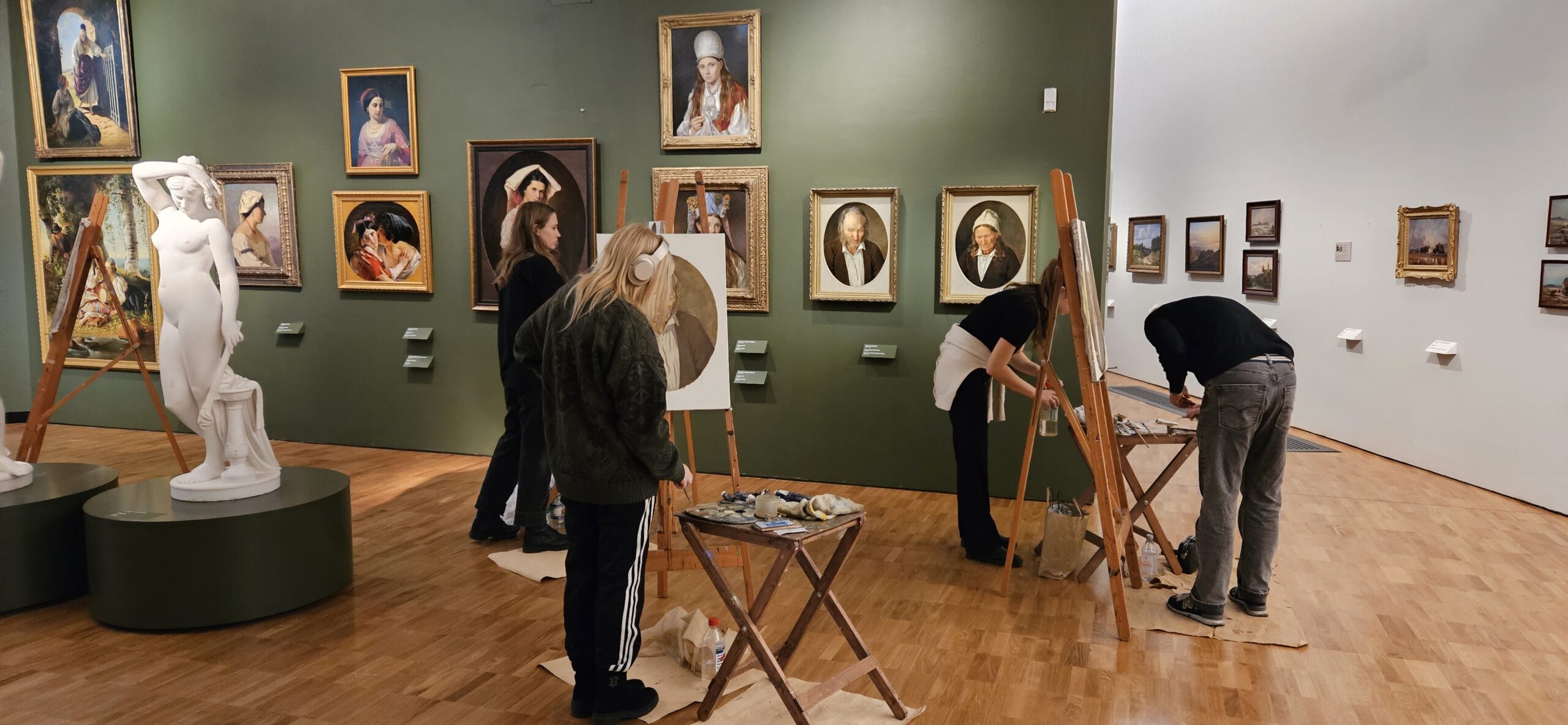
The permanent exhibition on the third floor, “Landscapes of Identity” (1700–1945), focuses on an era when Estonia was a borderland between East and West. The journey begins with the installation “The Sail”, which displays Baltic German manorial portraits, intertwining their stories with our own to highlight the mutual influences of the two cultures. Moving further into the gallery, visitors encounter the renowned Estonian master Johann Köler, who paved the way for Estonians to receive formal art education in St. Petersburg. The exhibition then guides you through the era of National Awakening and the years of independence, up until the tragic moment when freedom was replaced by the dread of foreign occupation.
The fourth floor houses two permanent exhibitions. The first is “Conflicts and Adaptations”, which explores Soviet Estonian art from 1940 to 1991. The Soviet occupation brought drastic changes to the Estonian art scene, enforcing an official state doctrine known as Socialist Realism. This was not merely an artistic style, but a mandatory method designed to depict a “bright future” and the supremacy of the Soviet regime. But what truly happened behind this polished facade, and how did artists adapt? The paradise promised by Soviet propaganda was a far cry from reality. Public depictions of mass deportations or the atrocities of the occupation were strictly forbidden. Consequently, these painful themes remained hidden for decades, appearing only in a handful of covert works or through subtle symbols understood by a select few. The exhibition explores which artistic movements were permitted and which were deemed “unrecommended.” To recreate an authentic atmosphere, the exhibition features a historical corridor composed of black-and-white photographs and archival video footage, helping visitors vividly recall or learn about the Soviet era firsthand.
The second permanent exhibition on the fourth floor, “The Future is in One Hour,” transports visitors back to the turbulent 1990s. The restoration of Estonia’s independence triggered an explosive wave of freedom and experimentation in the art world. This was a groundbreaking era where former ideological barriers vanished overnight, allowing artists to experiment without limits for the first time with new media such as video, photography, and sound art.
A visit to Kumu can be perfectly paired with a tour of the nearby Kadriorg Art Museum.
Important Info
Ticket prices for the KUMU can be found here.