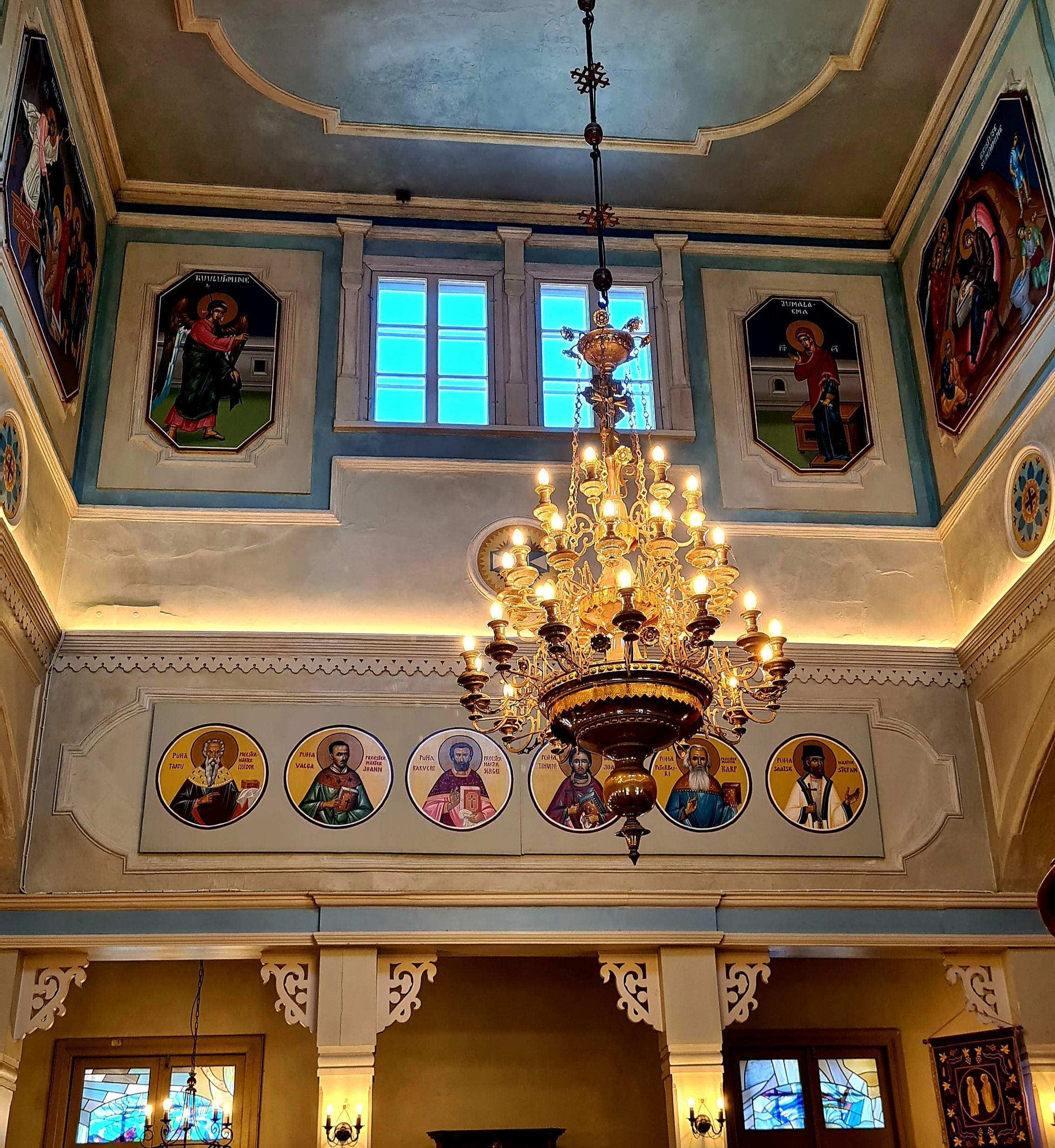
The Mysticism of the Orthodox Church
I take you inside Tallinn's Aleksander Nevski Cathedral on Toompea to decode the icons, the incense and the mysticism that sets the Orthodox tradition apart.
Overview
Tallinn Orthodox church tour — into Aleksander Nevski Cathedral
This Tallinn Orthodox church tour leads you up to Toompea hill and through the doors of Aleksander Nevski Cathedral, the five-domed sanctuary that has crowned the city’s skyline since 1900. The moment you step inside, the scent of incense, the glow of candles and a wall of gilded icons set the scene — and I’ll show you how to read all of it.
What you’ll see on this church tour
- Aleksander Nevski Cathedral on Toompea, completed in 1900 — Tallinn’s most prominent Orthodox church
- Five-dome Russian Orthodox architecture and the story of why a tsarist-era cathedral rose on the city’s highest point
- The iconostasis, the domes and the meanings hidden in the icons
- Stories of Tallinn’s Russian aristocrats and the world they worshipped in
- Orthodox mysticism, rituals and the customs that set this tradition apart from Catholic and Lutheran churches
Reading the icons on the Tallinn Orthodox church tour
We begin at the cathedral entrance on Toompea, where I share why this tsarist-era church appeared on the hill in 1900 and what it meant for the city below. Then we step inside. In front of the iconostasis you’ll hear how an Orthodox icon is never just a picture but a window meant to be venerated, and why the domes, the candles and the layout of the church each carry their own meaning. Estonia’s religious landscape is richer than most visitors expect, and this Tallinn Orthodox church tour is a rare chance to peer into a world of ancient tradition, saints and incense.
Although Orthodoxy in Estonia is usually associated with the Russian cultural sphere, many are surprised to learn that the country is also home to the Estonian Apostolic Orthodox Church, historically known as the Greek-style church. To deepen that picture, the route can take in the wooden Cathedral Church of St. Simeon and St. Anna the Prophetess at Ahtri 7, near the harbour’s D-terminal, whose history reaches back to the era of Peter the Great. Operating today as a metropolitan cathedral, this quiet wooden sanctuary is a perfect place to explore the mysterious world of icons up close.
I finish the Tallinn Orthodox church tour with the part many people remember most: Orthodox rituals and mysticism, and what separates Orthodoxy from the Catholic and Lutheran traditions. We trace where the Orthodox Church in Estonia came from, what it endured during the Soviet period and the challenges it faces today, comparing its customs side by side with those of the Lutheran Church you’ll meet elsewhere in town. The tour runs in English or Estonian and can be booked directly.
The Tallinn Orthodox church tour at a glance
- Duration: 1.5 hours
- Difficulty: Easy — a short guided walk on Toompea
- Group size: 1–15 people
- Languages: English, Estonian
- Meeting point: The entrance of Aleksander Nevski Cathedral on Toompea
- Suitable from: All ages
You may also like
- Tallinn Church Tour — a broader walk through the city’s sacred history
- Tallinn Cemetery Tour — famous Estonians and the Aleksander Nevski cemetery
- Tallinn Soviet Tour — the era that tested Estonia’s churches
- Browse all Tallinn tours
Highlights
- Step inside Aleksander Nevski Cathedral on Toompea, completed in 1900
- Five-dome Russian Orthodox architecture and the gilded iconostasis
- Icon meanings and the symbolism behind candles, incense and saints
- How Orthodoxy differs from Lutheran and Catholic traditions
- The story of Orthodoxy in Estonia, from tsarist times through the Soviet era
- Roughly 1.5 hours, mostly inside the cathedral
- Tour offered in English or Estonian
- Suitable for all ages and bookable online
Itinerary
Introduction on Toompea
Inside the cathedral — the icons
Orthodox mysticism and traditions
Includes / Excludes
Includes
- Licensed local guide
- Guided tour in English or Estonian
- All stories, icon meanings & local history
- Etiquette guidance for visiting an active church
Excludes
- Church donation or candle offerings
- Food & drinks
- Transport to the meeting point