Jõelähtme
Overview
This tour is a journey through time, taking you in just a few hours from medieval sanctuaries through a Soviet-era mining town’s “Indian slum,” making a detour into traditional Estonian village life, and finally immersing you in the heart of nature. It is a story of Estonia’s history, where vastly different worlds exist just a short distance apart.
The journey begins at the Saha Chapel of St. Nicholas. This is a true historical gem—one of the oldest and most completely preserved medieval stone chapels in Estonia. From there, we move on to Maardu, a former mining town. Here, we experience a real “time machine”: driving through a cityscape that echoes Soviet-era reality, we suddenly descend the hill and find ourselves in the 16th-century village of Rootsi-Kallavere. Life in this historic village community moves to a completely different rhythm than in the town above. The exhibits in the village museum tell authentic stories of this location’s rich and resilient past.
Driving through the Maardu allotment shantytown, you can only watch in amazement. This area emerged illegally during the Soviet era, with people building their houses and gardens out of whatever scrap materials they could find. It serves as a living example that you don’t have to travel to India to find slum architecture—it is unexpectedly closer to home than you might think.
Next, we travel back to ancient times by visiting the Rebala stone-cist graves, historically known as child-cairns). Interestingly, these rare ancient burial mounds did not get their name from children buried there, but rather from young herders who loved to climb the ancient stones to keep watch over their cattle. We will also pause at the edge of the Maardu open-cast mining trench, a stark testament to a landscape reshaped by human hands.
Before entering the Jõelähtme Church, we will stop to pay tribute to the local men who fought for Estonia’s freedom. The history of Jõelähtme Church itself dates back to the 13th century, marking the arrival of the Danes and the establishment of Christianity in these lands.
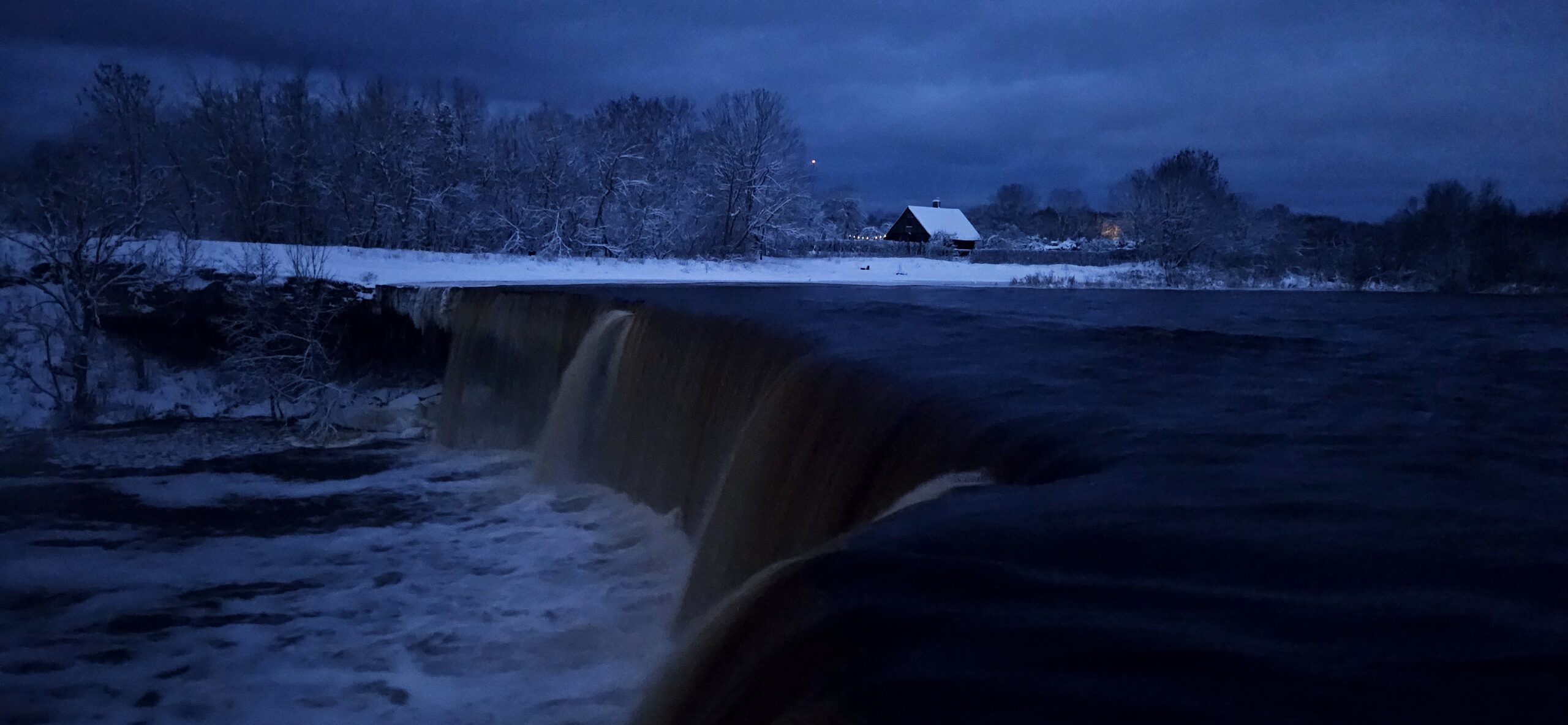
To conclude the day, we will visit Jägala Waterfall, the widest natural waterfall in Estonia, and the Linnamäe Hydroelectric Power Plant dam, which was declared a cultural monument in 2016. For the bravest adventurers, there is also an opportunity to cross the Jägala River via a swaying suspension bridge.